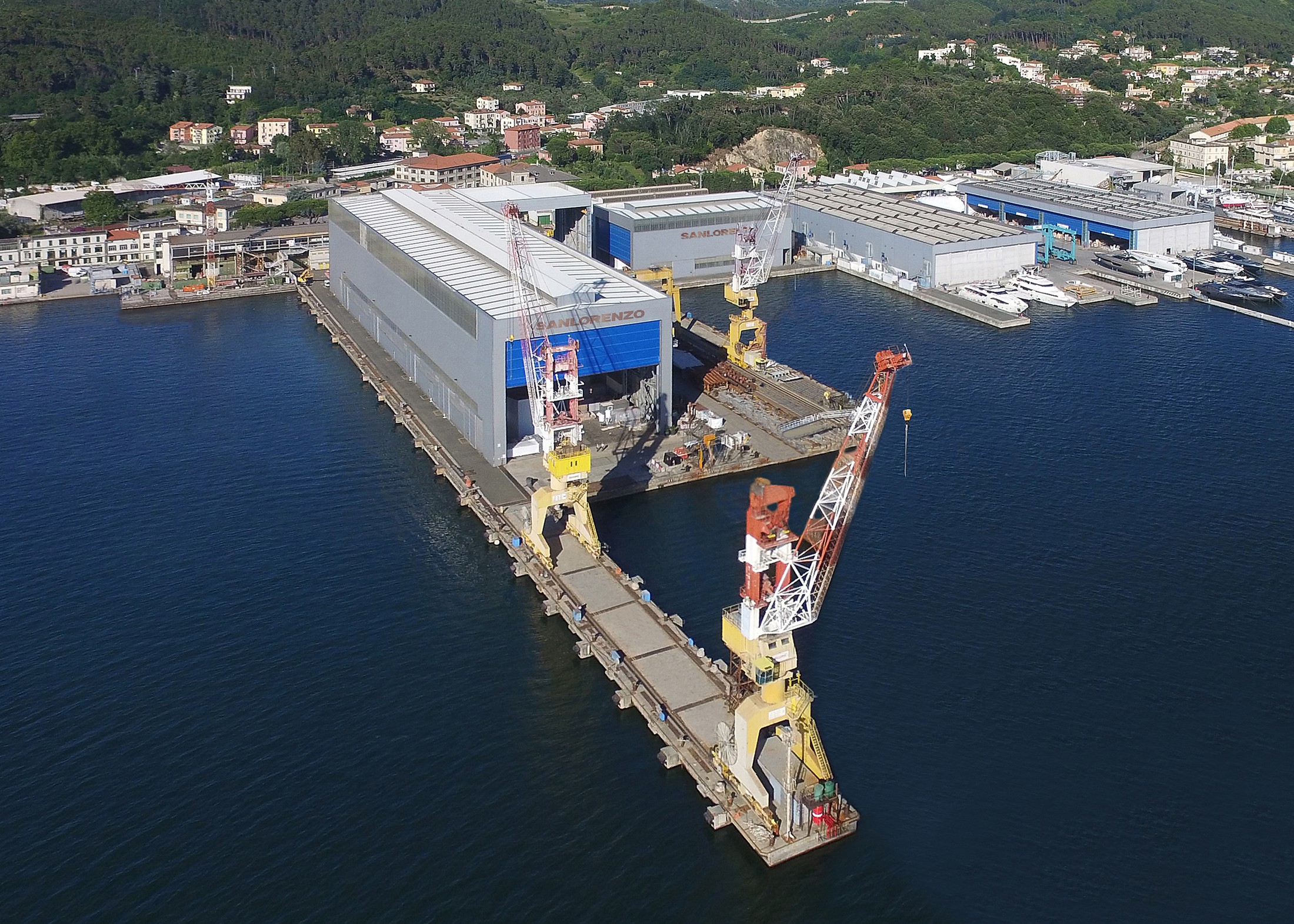
Sanlorenzo began in Ameglia, Italy, in 1958 building wooden boats before moving into glass fibre in the 1990s. Today it is one of the yards building superyachts above forty metres, and the 50Steel is the most technically experimental vessel it has launched.
The core of the system is a methanol reformer and a fuel cell. Methanol carried on board is heated above 250 degrees and split into hydrogen and carbon dioxide; the hydrogen feeds a fuel cell that produces electricity. Output is around 100 kW, enough to cover much of the hotel load at anchor without running diesel generators through the night.
The hull measures 499 gross tonnes at fifty metres, steel below and aluminium above. Four decks divide the interior, with the owner's suite forward on the upper deck. Moving the engine room lower freed space for a seawater pool and beach club, and the stern platform folds down to the water.
Interiors were designed in house, combining walnut, oak and travertine across five cabins. Long windows run along the hull so the sea is visible from inside, and lighting is by the Italian manufacturer Artemide throughout.
Methanol is harder to handle than diesel: it has a low flashpoint and requires separate certification for tanks and piping. Sanlorenzo went through that process in advance. Methanol remains experimental in the superyacht industry, and the 50Steel is among the first examples to put the experiment into a vessel that actually cruises.
CLAVES
- The Sanlorenzo 50Steel is a 50-metre superyacht
- It reforms methanol into hydrogen on board and generates electricity with a fuel cell
- The fuel cell produces around 100 kW and covers hotel loads at anchor
- 499 GT with a steel hull and aluminium superstructure
- Moving the engine room lower freed space for a seawater pool and beach club
Si considera que este artículo contiene un error, puede solicitar una corrección o un derecho de réplica mediante nuestro procedimiento de corrección. Escriba a press@ateliermbent.com.
SIGUIENTE · YACHT RIVA 130' BELLISSIMA: the largest Riva ever built →